Skip to content
EN
Contact

How it works

Charge your seed once. Plant as usual.

The HyperSound Egg is a passive device. Before planting, your seed runs through it once, from one box into the other, while the Egg stands grounded in your shed. Nothing is added to the seed, and your planting routine stays the same.

  • No power supply
  • No moving parts
  • No additives
Real footage, November 2026: seed corn runs through the HyperSound Egg.

Four steps

From the seed box to the yield monitor

  1. A machine shed with a tall pallet rack: a seed bulk box stands on the top level, the white HyperSound Egg sits on the middle shelf, and a second bulk box waits below it.

    Set up the Egg

    Set it up in your shed, next to your seed, on a stand or a pallet rack. Ground it and fill the entropy cartridge, as shown below.

  2. In a machine shed, the HyperSound Egg hangs under a bulk seed box and feeds treated seed into a second box.

    Run your seed through once

    Before planting, the seed runs through the Egg once, from one box into the other. Gravity does the work.

  3. A green tractor with a yellow multi-row planter on a freshly worked field; bags of seed corn lean against the planter, trees and a blue sky behind.

    Plant as usual

    Same hybrid, same population, same fertility program, same field work. Your routine stays the same.

  4. HyperSound Control

    Compare at harvest

    Leave an untreated strip next to a treated one, harvest both the same day and weigh them. Your numbers decide.

Inside the Egg

What happens inside

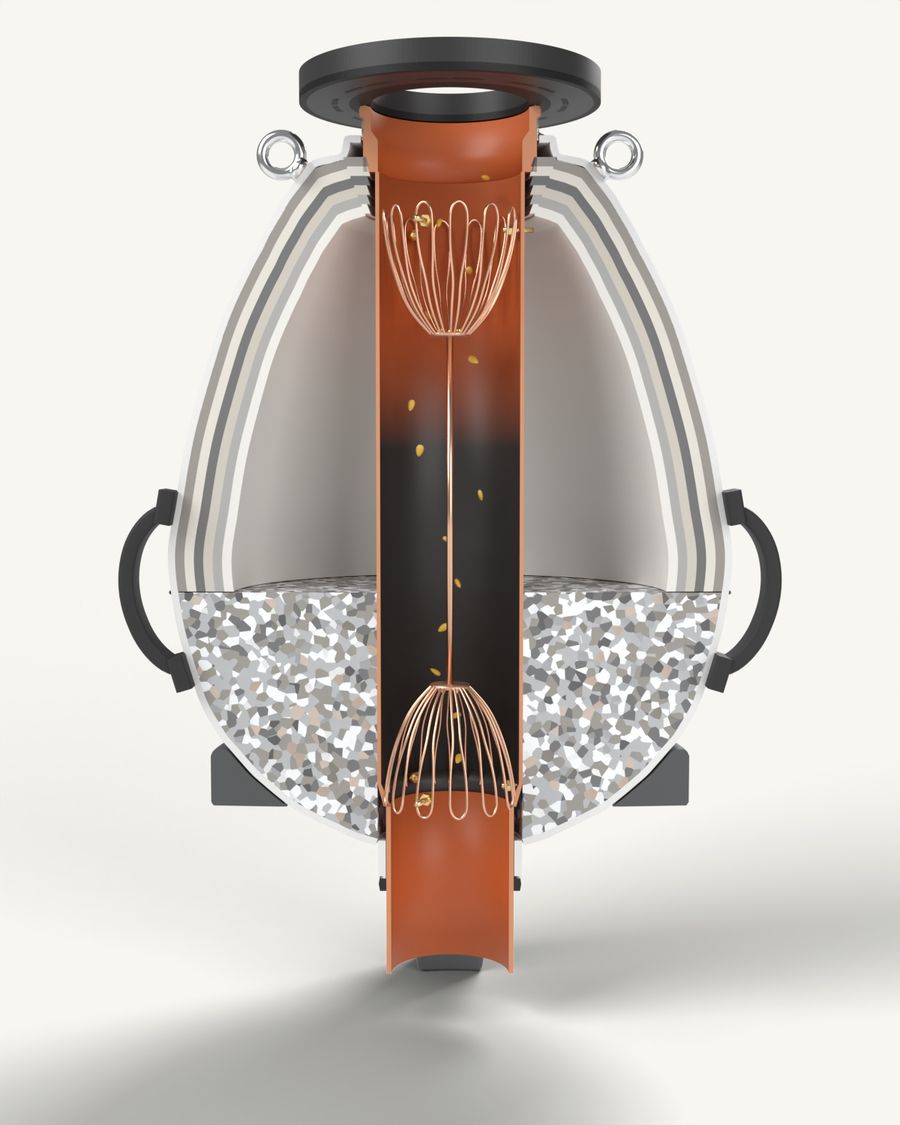
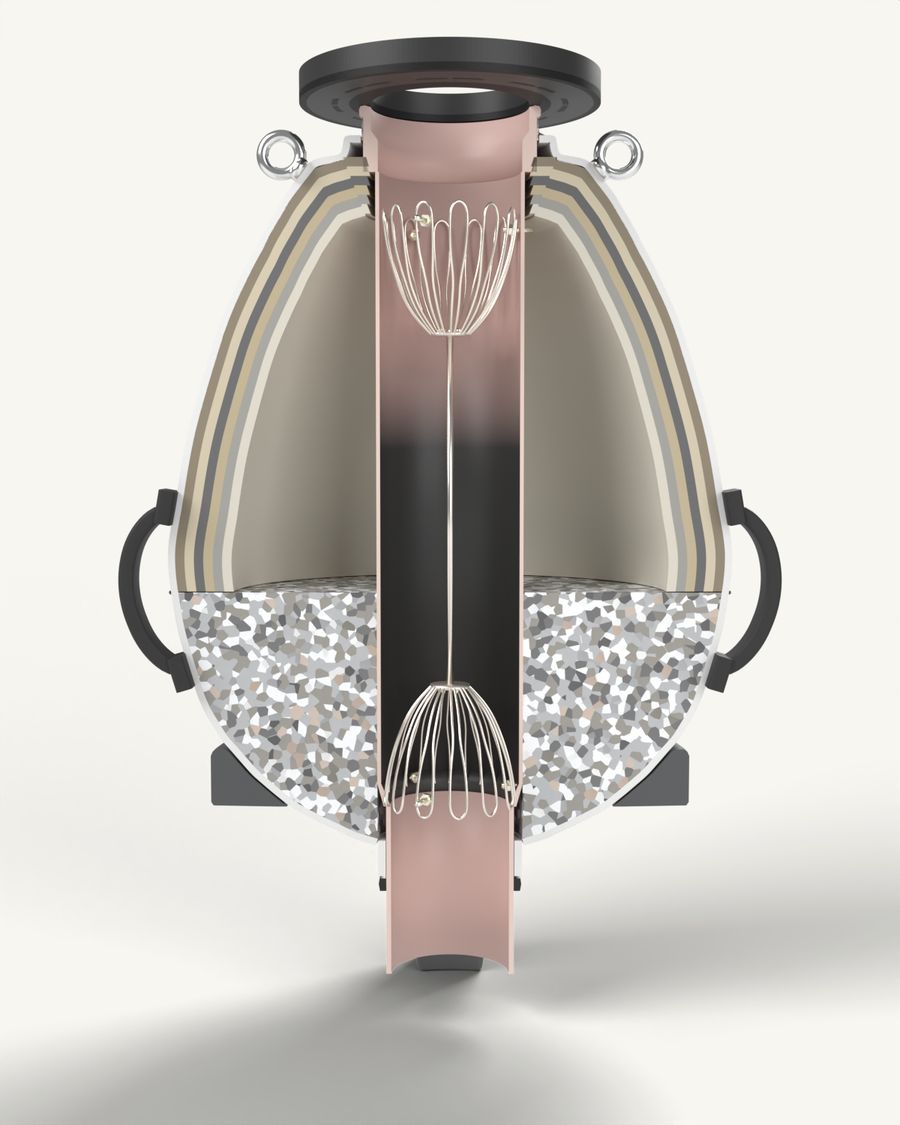
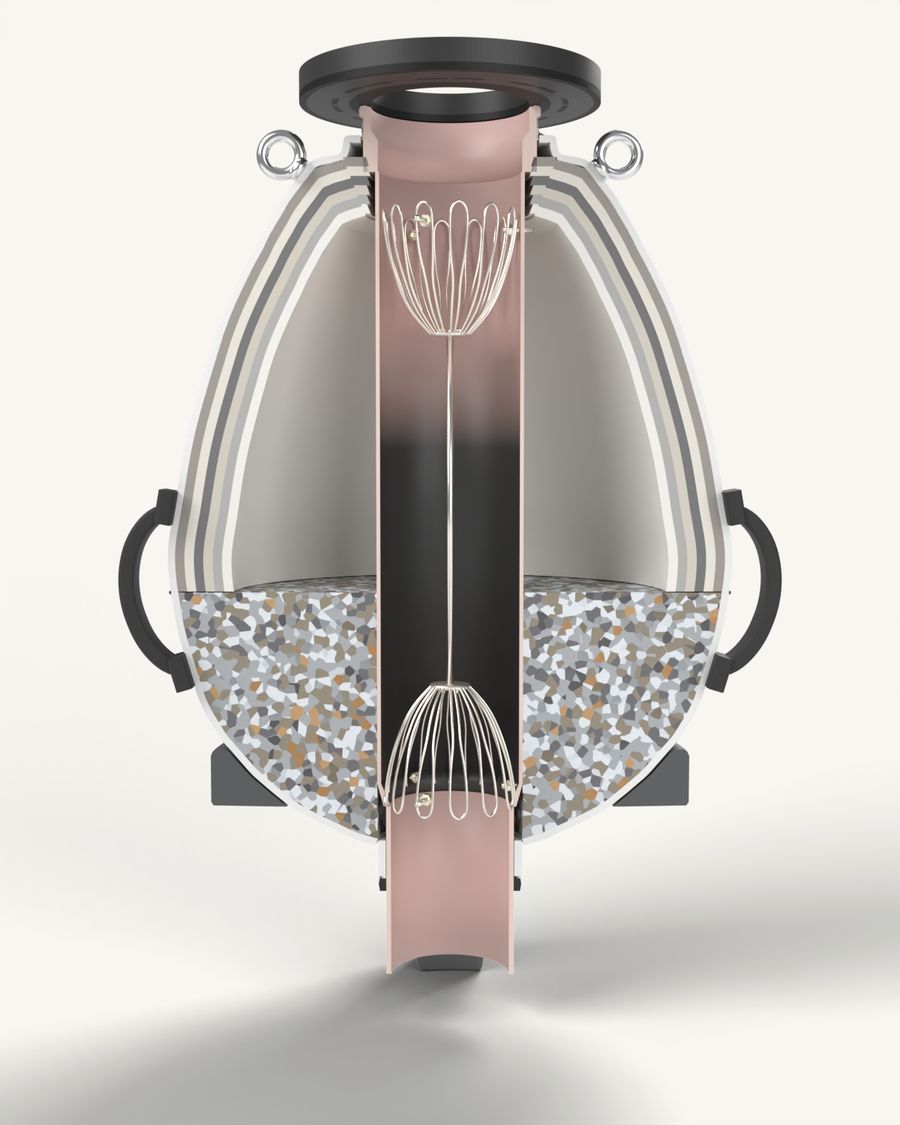
A cut through the Egg shows how simple it is. Scroll through three steps, or use the buttons below the picture.

3D model
Seed runs from the upper box through the Egg into the lower box. 3D model of the 2026 Egg · inside shown schematically.
1Seed in3No power cable, no battery2Layered wall2Resonance chamber1Straight tube2Ceramic mix3No moving parts1Seed out
Cut through the 3D model of the 2026 Egg: the straight orange tube with a copper grid near the top and near the bottom, joined by a copper rod, and corn kernels inside the tube.3D model
Cut through the 3D model of the 2026 Egg: around the tube, the resonance chamber with its layered wall is highlighted.3D model
Cut through the 3D model of the 2026 Egg: the ceramic mix in the lower third is highlighted.3D model
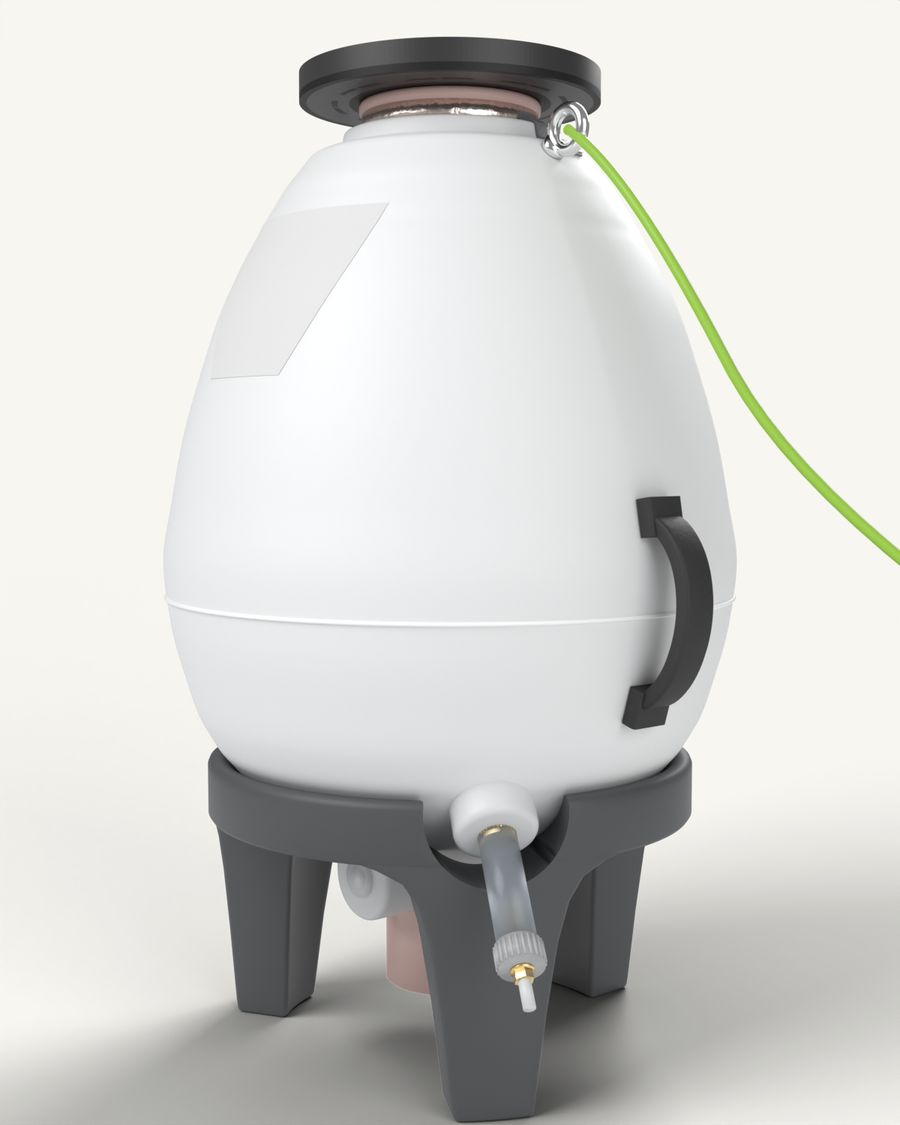
3D model of the 2026 Egg turned to one side: the three-legged stand, the entropy cartridge pulled out of its port, and the ground cable.3D model

3D model of the 2026 Egg · inside shown schematically.

Drawn to the proportions of the 2026 Egg (Gravity 5″: 81 cm long, 48 cm across). The inside is shown schematically, after the manufacturer’s description.
  1. Seed falls straight through

    Seed enters at the top flange, runs down a straight tube and leaves at the bottom into the next box.

    Nothing is added on the way: no coating, no liquid, no powder. The seed comes out as it went in, only treated.

  2. Around the tube: resonance chamber and ceramic mix

    In the upper two thirds, the tube runs through a resonance chamber: air, enclosed by a wall built from many layers of different materials. The lower third holds a ceramic mix of metals, quartz and rare minerals. The manufacturer changes the crystal lattice of the metals and the quartz with a femtosecond laser. That is the manufacturer’s description, also quoted in the 2025 PTI report.

    The proof of concept is in the harvest: the field results show what was harvested, and the science page explains what hypersound means in physics.

  3. No power, no moving parts

    There is no power cable, no battery, no motor and no control unit. The only thing you add before you start is a piece of rock sugar in the entropy cartridge.

    It fits standard Whitworth threads or standard inch flanges. The eye bolts on top make it easy to lift the Egg and take the ground cable.

Drawn to the proportions of the 2026 Egg (Gravity 5″: 81 cm long, 48 cm across). The inside is shown schematically, after the manufacturer’s description.

Explainer video · 4 min

The Egg explained, step by step

Felix Scheffel walks through the 2026 Egg: copper grid, grounding, the removable grid, drain, entropy cartridge, flange and underside. On the left his own recording, on the right the same steps in 3D.

Photo looking down into the 2026 Egg: the copper-lined tube with the Faraday grid inside, made of bent copper wire loops held by brass screws.
Looking into the 2026 Egg from the top: the Faraday grid inside.

Voice: original recording of Felix Scheffel (lightly edited: hesitations and long pauses removed). One added sentence at 3:14 (“In plain words …”) is spoken by an AI-generated voice of Felix Scheffel. 3D animation made with Blender.

Chapters

  1. 0:00 The finished unit
  2. 0:22 Inside: the Faraday grid
  3. 0:46 Conductive band
  4. 1:05 Grounding
  5. 1:51 Removable grid
  6. 1:59 Water drainage
  7. 2:08 Entropy cartridge
  8. 2:26 Activating the cartridge
  9. 2:58 Back in place
  10. 3:28 Flange
  11. 3:48 Underside
  12. 4:07 Contact

Before you start

Set-up: ground and cartridge

Three things to do before the first seed runs through the Egg.

  1. Set it up in your shed

    Place the Egg next to your seed, on a stand or a pallet rack, so that the seed can run from one box through the Egg into the other.

  2. Ground the Egg

    Run a thin copper cable from one eye bolt, or from the carbon band, to the protective earth of a power outlet, to a water pipe or to a steel beam of the building. Grain running through plastic tubes builds up static charge, and the ground takes it away.

  3. Fill the entropy cartridge

    Drop one piece of rock sugar into the entropy cartridge, fill it with still water and screw it back into the base. While the sugar dissolves, for about five hours, the Egg is fully active. For a longer day, simply add a new piece. A 100 g bag of rock sugar comes with the Egg.

Hands hold three clear entropy cartridges with screw caps and threaded extension handles; the base of an Egg is visible below.
Entropy cartridges with screw cap and extension handle, 2026.
In a machine shed, a young man pours corn seed from a paper bag into the black funnel on top of the white HyperSound Egg. More seed bags stand on a pallet beside it.
Filling corn seed from the bag into the funnel on top of the Egg.
AI-generated close-up: the base of the 2026 Egg on its stand with the entropy cartridge screwed into its socket; a measuring jug of water and a small bowl of rock sugar stand beside it on a workbench.AI-generated
Entropy cartridge, rock sugar and still water. AI-generated image of the 2026 Egg.

Your own data

Run your own strip trial

The best evidence is a trial on your own field. This is the layout Terry Good uses with a 24-row planter: untreated and treated strips side by side, repeated three times, with the untreated seed always planted first.

HyperSound test plot layout

Planting order

  1. Untreated seed: plant first
  2. Treated seed: plant second

Outside rounds and end rows: untreated, plant first

1Untreated outside roundsmin. 24 rowsnot part of the plot 1Rep 1 · untreated2Rep 1 · treated1Rep 2 · untreated2Rep 2 · treated1Rep 3 · untreated2Rep 3 · treated Fill in the field with treated seedor continue replicationsof treated and untreated strips 1Untreated outside roundsmin. 24 rowsnot part of the plot End rows · planted first · untreated End rows · planted first · untreated

One strip, 24 rows: harvest the middle 12

6 rows 12 rows harvest 6 rows
Drawing not to scale. Each strip is 24 rows wide, one pass of the 24-row planter. Layout by Terry Good, HyperSound North America

Do’s and don’ts for a 24-row planter

Keep seed apart

  1. Keep untreated seed 20–30 ft away from the device.
  2. Keep treated seed 20–30 ft away from untreated seed.

Planting

  1. Plant the untreated outside rounds and the untreated strips first.
  2. Plant the treated strips second.
  3. Never split the planter between treated and untreated seed.

Harvest

  1. Harvest the middle 12 of the 24 rows in each treated strip.
  2. Harvest the middle 12 rows of each untreated strip.
  3. Combine the same number of acres of treated and untreated corn.

Layout by Terry Good, HyperSound North America

Download the plot layout (PDF)One page, US Letter · 590 KB

Also important

  1. Pick one uniform field

    Same soil, same hybrid, same population and the same planting date for treated and untreated seed.

  2. Empty the planter before you switch

    After the untreated strips, clean out the planter, then load the seed that ran through the Egg. That way no treated seed ends up in the control.

  3. Keep everything else the same

    Same fertility, irrigation and field work on every strip. Write down anything that hits one strip only, such as wildlife damage or a wet spot.

  4. Weigh and send us the numbers

    Use a calibrated yield monitor or a weigh wagon, record moisture and correct to standard moisture. Send us the numbers. We publish every result, including the small ones, and name your farm only with your consent.

The layout and the eight rules are also available as a one-page PDF to print and take to the field.

Applications

Seed, potatoes, fertilizer

The 5-inch Egg is made for corn seed, the 6-inch Egg for seed potatoes and edible beans.

Bulk box, funnel, Egg Seed pours from a bulk box through a funnel into the Egg, in a machine shed. 9 s · 1.8 MB With the original sound of the recording. The clip loads only when you press play.

Seed

Before planting, the seed runs through the Egg once, from one box into the other. The Egg stands grounded in your shed, with the entropy cartridge filled.

In the PTI Farm corn study, seed corn was run through a 3-inch Egg before planting (+6.0 bu/A).

Device Gravity 5″

See the corn results

Fertilizer and manure

The Gravity Eggs mount with standard threads or inch flanges, so they can also sit in a fertilizer line.

In a 2019 trial in Germany, both the seed of an oat-pea mixture and the cow manure used as fertilizer were treated. That trial had no untreated strip, so it is not counted in our corn figures. Tell us how you apply fertilizer or manure and we will suggest a setup.

Device Gravity 5″, by line size

Ask about your setup

The 6-inch Egg in a storage hall, Plum Coulee, Manitoba, 2023. 26 s · original sound
Seed potatoes running into the 6-inch Egg, Cypress River, Manitoba, 2023. 13 s · original sound

Seed potatoes

The 6-inch Egg treats seed potatoes. In 2023 two farms in Manitoba ran their seed potatoes through it.

Both farms harvested more marketable potatoes than the untreated control. The two clips show the 6-inch Egg on these farms.

Device Gravity 6″

See the potato results

Next steps

Pick the device that fits your farm, and see what the published results would mean for your acres.